

When “Temporary” Infrastructure Still Needs a Permanent Solution

When you think about temporary works on a project, it’s easy to assume they don’t need the same level of attention as permanent structures.
But that assumption doesn’t always hold up in the real world.
In Semarang, Indonesia, a hydroelectric project faced exactly this challenge: how to build a water diversion channel that would only exist for a couple of years… but still perform like a long-term asset.
At first glance, the brief sounded straightforward:
- divert water away from the site
- prevent erosion
- keep the surrounding area protected
Simple enough. Until the realities of the site kicked in.
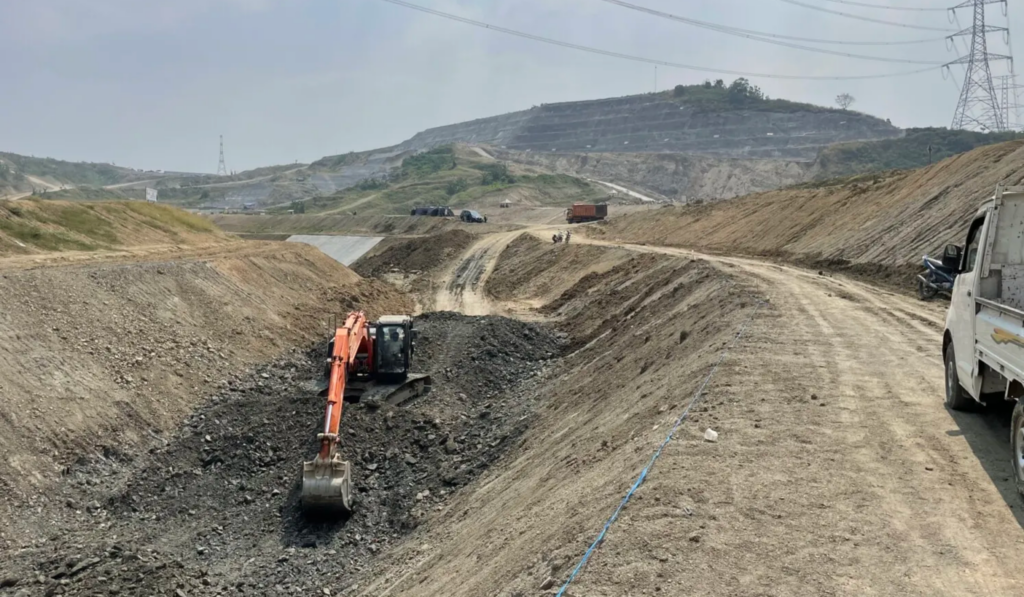
The reality on the ground
The channel stretched 360 metres, in a remote location, with limited access to heavy equipment and specialist labour.
And despite being temporary, it couldn’t fail.
If the lining didn’t hold:
- erosion would compromise the channel
- water could seep into surrounding ground
- the wider project would be at risk
Naturally, the team turned to traditional solutions
Poured concrete was the first option on the table.
On paper, it made sense. In practice, it didn’t.
Transporting materials and equipment, and bringing in skilled labour quickly made it financially unrealistic for a structure that would eventually be submerged.
Shotcrete was then trialled as a more flexible alternative.
But that came with its own problem: It simply did not bond properly to the soil.
At that point, the project had hit a familiar challenge. Conventional methods were not suited to the realities of the site.
A different approach
Instead of forcing a traditional solution to work, the team shifted direction.
They selected CCX-MAT® (CCX-M®), a Geosynthetic Cementitious Composite Mat designed specifically for applications like this.
And this is where things started to improve.
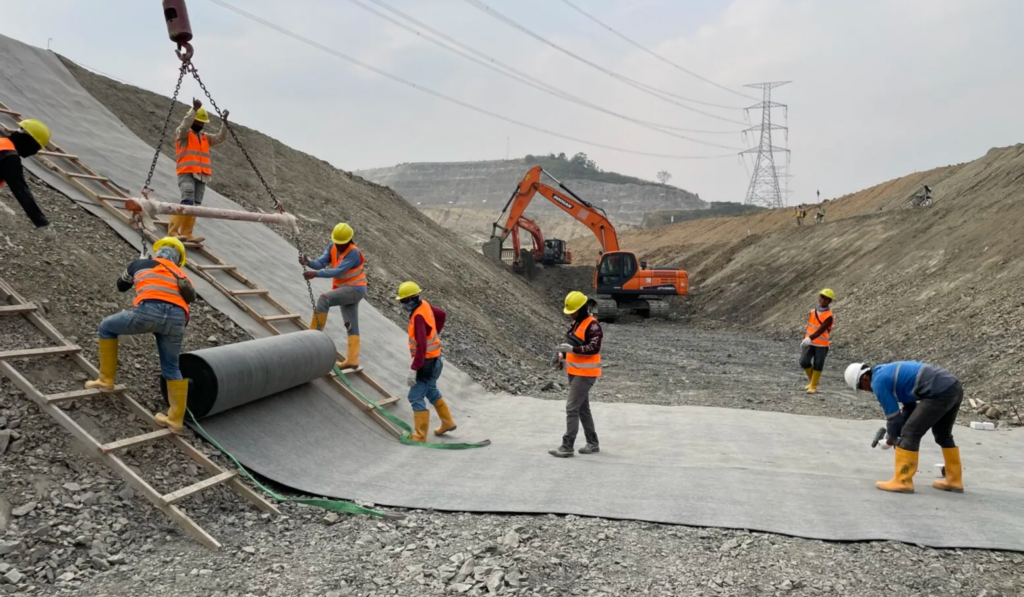
What made the difference wasn’t just the material
It was how it simplified everything around it.
Installation did not rely on complex systems or large crews.
Bulk rolls were delivered to site, lifted into position, and laid across the channel. They were cut to size using basic tools, overlapped, secured, and then hydrated using water from a nearby stream.
No specialist concrete equipment. No large-scale logistics operation. No delays waiting on perfect conditions.
And the impact was immediate
A team of just nine installers was able to line the channel at a rate of:
➡️ 700m² per day (in 7-hour shifts)
The project didn’t just recover, it moved ahead of schedule.
And importantly, it delivered a solution that performed exactly as required, despite the constraints.
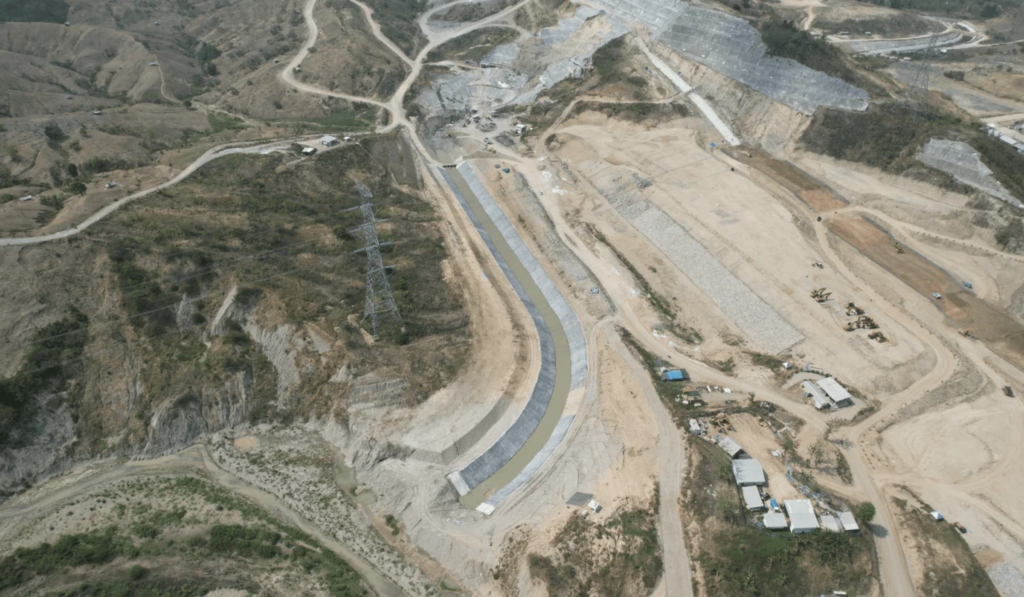
So what’s the takeaway?
This wasn’t just about solving an erosion problem.
It highlights something we are seeing more often across infrastructure projects:
The biggest gains don’t always come from doing things better, but from doing them effectively.
Even for temporary works, the right material choice can:
- remove logistical barriers
- reduce costs significantly
- reduce risk across the project
Final thought
As projects continue to push into more remote and complex environments, the gap between traditional methods and practical reality becomes more obvious.
And that’s where our innovative materials play a critical role for the future.
Additional Reading

CCX-M™ channel lining in Semarang protects 10,540 m² water diversion channel from erosion quickly and cost-effectively

CCX® used in a large river diversion project in Indonesia, delivering durable, low-carbon canal lining with reduced seepage