

How to reduce risk on critical canal infrastructure?
On the Canal de Provence, the requirement was clear.
A section of canal needed to be lined quickly and efficiently, with minimal disruption to a live water system.
But like most infrastructure projects, the challenge was not just about the end result.
It was about how you get there.
The canal plays a critical role in regional water management, so extended downtime or complex installation processes were not really an option.
Any solution had to be practical to deliver on site, not just effective once installed.
In this case, the scale of the project made that even more important.
The section of canal in question supports water supply for around 2 million people across 107 municipalities, as well as agricultural irrigation, industrial use, and fire defence.
This was not just a lining project. It was critical infrastructure.
Traditional methods were considered, but they brought familiar challenges. Installation time, equipment requirements, and the risk of disruption all had to be carefully managed.
It quickly became clear that the solution needed to be as efficient to install as it was reliable in performance.
With those constraints in mind, CCX-M® was selected by the engineer as the lining of choice.
Not just for its technical performance, but for how simply it could be installed.
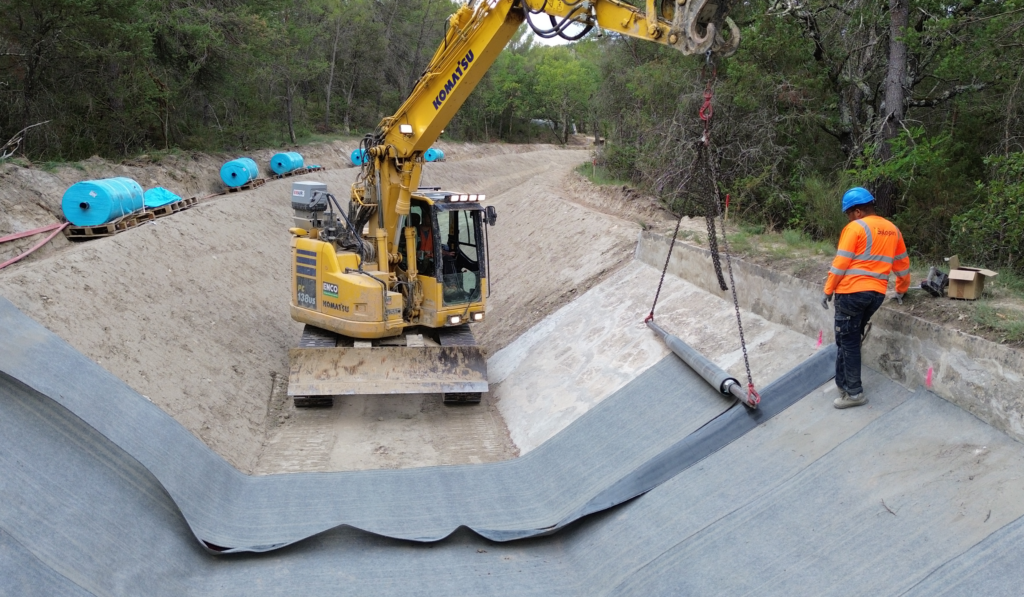
Bulk Rolls were delivered to site and positioned along the canal. The material was unrolled directly onto the prepared surface, cut to size, and secured using a simple overlap and fixing method. Hydration was carried out using water from the canal itself.
This allowed the team to work progressively along the canal, without the need for complex equipment or large installation crews.
Installation is often where the greatest risk sits, and simplifying that process makes outcomes far more predictable.
In this case, the result was a lining solution delivered efficiently, with minimal disruption to a critical piece of infrastructure, while still achieving the required level of performance.
What this project highlights is a shift in thinking.
It is no longer just about selecting a solution, but about how that solution performs over time and fits within a wider system.
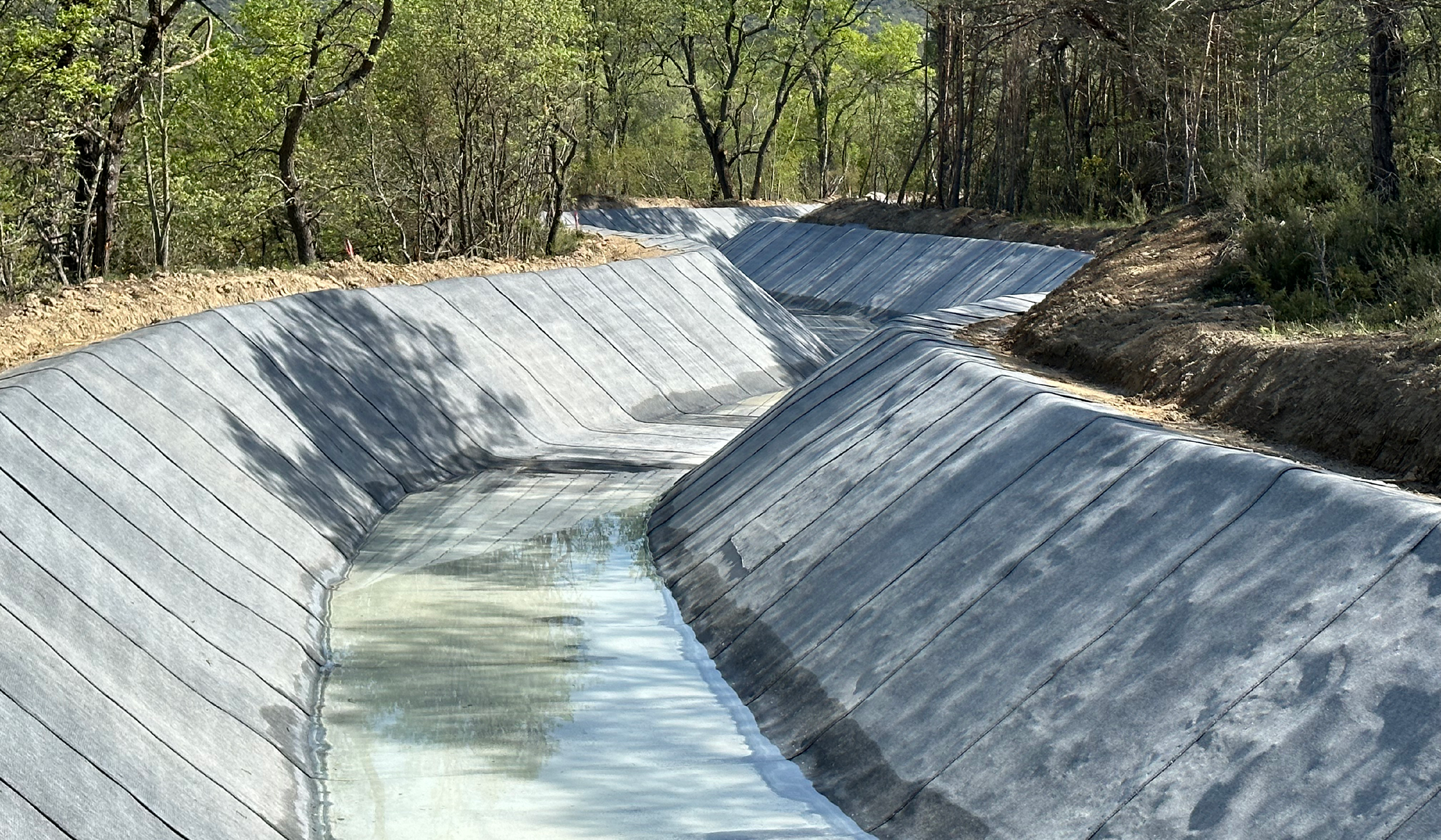
Projects like Canal de Provence show that it is not just about choosing a material.
It is about choosing an approach that works during installation, performs after completion, and supports future adaptation.
Ultimately, good infrastructure solutions solve the problem in front of you.
Better ones make what comes next easier as well.
Additional Reading


15,000m² of CCX-M® installed in Saint-Julien to line the Canal du Verdon, providing durable erosion control


CCX-M 50 Year Age Certification
CCX-M® 50-Year Durability Certificate for erosion control and weed suppression, validated by component testing